
Gala vs Banquet: What’s the Difference and Which Is Right for Your Event?
If you’re planning a formal event, you’ve likely encountered the question: Should this be a gala or a banquet?
At first glance, the two terms seem interchangeable. Both involve seated dinners. Both often include speeches or awards. Both may require staging, audiovisual production, and thoughtful guest flow.
But while galas and banquets share similarities, they are strategically different event formats. Understanding the distinction is critical because the structure you choose will shape everything from your budget and production needs to your guest experience and ROI.
Let’s break down the real difference between a gala and a banquet, and how to decide which is right for your organization.
What Is a Gala Event?
A gala is typically a mission-driven, high-impact event designed to inspire, engage, and often fundraise. Galas are most common in nonprofit and philanthropic settings, though corporations also use the format for major milestone celebrations or brand moments.
Galas usually include:
A strong storytelling component
Mission-focused messaging
Emotional appeals or impact moments
Fundraising elements such as auctions or pledge drives
Elevated ambiance and immersive design
A fundraising gala is not simply a dinner. It is an experience carefully designed to motivate generosity and reinforce purpose.
Production design tends to be layered and cinematic. Lighting, scenic elements, video storytelling, and show pacing all contribute to an emotional arc. In many cases, gala production resembles a live show more than a traditional dinner program.
What Is a Banquet Event?
A banquet, by contrast, is typically recognition-focused or celebratory in nature. Banquets are common for corporate awards, association milestones, athletic celebrations, and internal culture events.
Banquets generally center around:
Structured programming
Award presentations or recognition moments
Leadership remarks
Celebrating achievements or milestones
While banquets can absolutely feel elevated and high-end, their primary objective is often celebration rather than fundraising.
The production needs for a banquet are often more contained than a gala. The focus is on clarity, pacing, and professionalism, particularly if awards are involved.
Gala vs Banquet: Key Differences at a Glance
Gala
Fundraising & mission engagement
Inspirational, mission-driven
Often includes auction or appeal
Typically high-impact & immersive
Extensive narrative integration
Elevated ambiance, impact moments
Gala
Fundraising & mission engagement
Inspirational, mission-driven
Often includes auction or appeal
Typically high-impact & immersive
Extensive narrative integration
Banquet
Recognition & celebration
Celebratory, achievement-focused
Rarely primary focus
Structured and polished
Focused on honorees or milestones
Formal dinner with program
Elevated ambiance, impact moments
The primary difference between a gala and a banquet is that a gala is typically mission-driven and fundraising-focused, while a banquet is generally recognition or celebration-focused.
That single strategic distinction influences nearly every production decision.
Purpose and Intent: Fundraising vs Recognition
Before choosing between a gala and a banquet, clarify your core objective.
If your primary goal is to raise funds, cultivate donors, and deepen mission engagement, a gala is often the stronger format. Galas create space for emotional storytelling, live appeals, and donor cultivation moments that drive revenue.
If your goal is to celebrate internal achievement, honor industry leaders, or mark an organizational milestone, a banquet may be more appropriate. Banquets excel when the focus is structured recognition and collective celebration.
Choosing the wrong format can create friction. A banquet forced to perform like a gala may feel disjointed. A gala treated like a banquet may underperform financially.
Production and Experience Design Differences
From a production standpoint, galas and banquets require different approaches.
Gala Production
Gala event planning often requires:
Cinematic lighting design
High-impact video storytelling
Emotional pacing
Auction staging or appeal integration
Strong show calling discipline
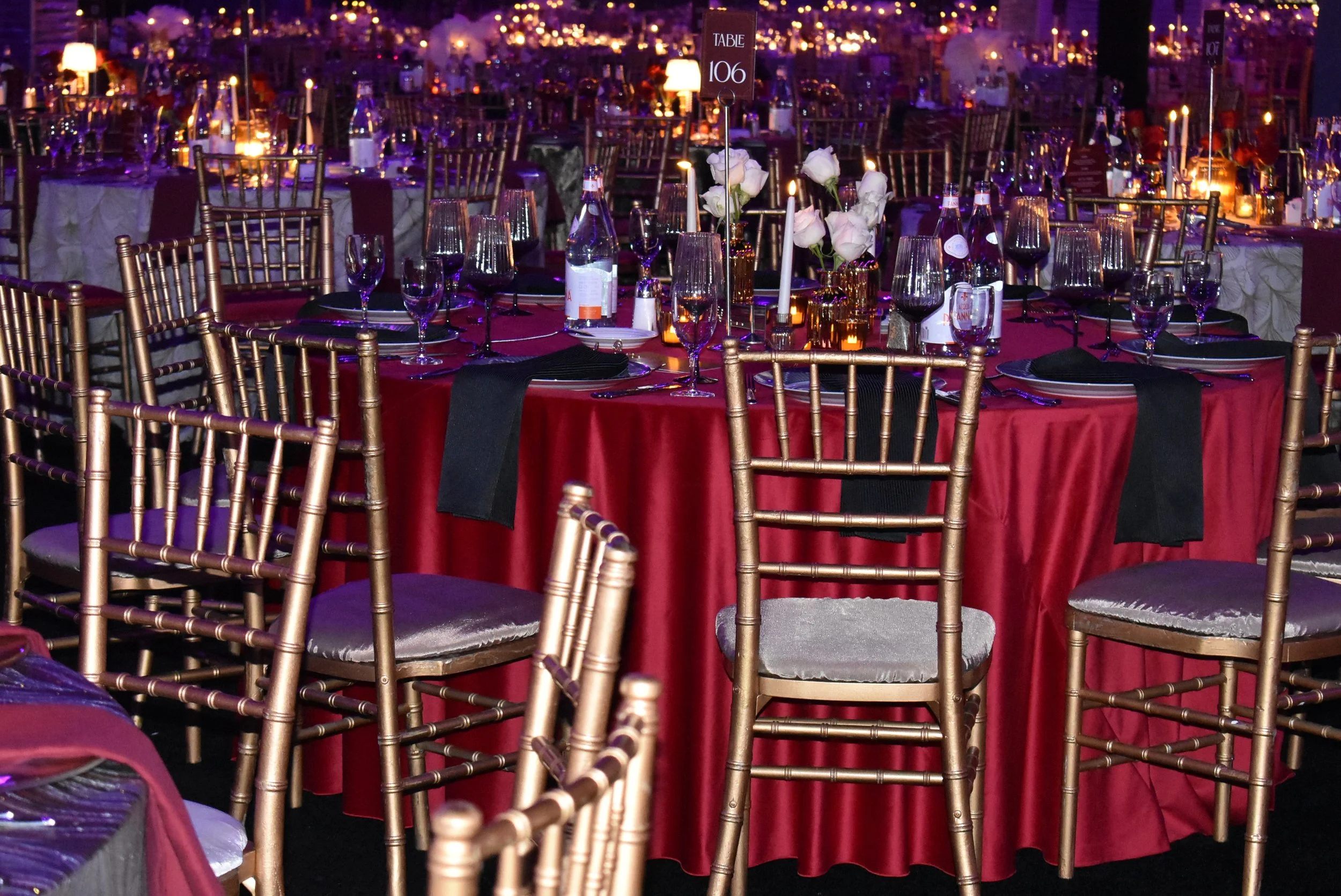
Because fundraising moments are time-sensitive and emotionally charged, live event production precision is critical. Audio clarity, lighting transitions, countdown cues, and pacing must be seamless.
Banquet Production
Banquets emphasize clarity and professionalism. Production focuses on:
Clean stage design
Clear sightlines
Structured award sequencing
Tight show flow
Banquets may require less immersive scenic layering than a gala, but they still benefit from thoughtful production design.
Budget Considerations: What Impacts Cost?
Budget is often a deciding factor in the gala vs banquet discussion.
Galas typically carry higher production costs because they involve:
Scenic upgrades
Enhanced lighting design
Video production
Auction technology
Entertainment integration
However, they are also designed to generate revenue. The investment supports fundraising ROI.
Banquets can often be executed with more contained budgets. Their costs are typically concentrated around venue, catering, staging, and audiovisual support.
That said, a banquet can become expensive if production expectations rise. Elevation always requires intention — and resources.
Guest Experience and Atmosphere
Guest expectations differ between formats. Gala attendees often anticipate a sophisticated, immersive evening. They expect storytelling, ambiance, and meaningful impact moments. Banquet guests expect structure, clarity, and celebration. They want recognition to feel organized and professional.
Both formats can feel elevated, but the sense of elevation varies by context.
When to Choose a Gala
A gala may be the right format if:
Fundraising is a primary objective
You need to cultivate high-level donors
Emotional storytelling is central
You want to create a signature annual event
Brand perception and prestige are key
Galas work best when they are designed strategically from the outset, rather than retrofitted with fundraising components.
When to Choose a Banquet
A banquet may be the right format if:
You are recognizing individuals or teams
You are celebrating a milestone
You want a formal but structured evening
Fundraising is not a core component
Your audience expects a classic awards format
Banquets excel at honoring achievement with clarity and dignity.
Can You Blend the Two?
Yes, and many organizations do.
Some events combine elements of both formats, such as an awards banquet that includes a short fundraising appeal. Others may host a gala that features structured recognition moments.
The key is clarity. The event must have a dominant identity. Blended formats should still feel cohesive, not confused.
This is where strategic event consulting becomes invaluable. Choosing the right format and designing it intentionally ensures your event delivers on its objective.
Final Thoughts: Format Matters — But Execution Matters More
When evaluating gala vs banquet, the real question is not which is better; it’s which aligns with your goals.
Both formats can be elevated. Both can be powerful. Both require intentional production.
At Stratus Firm, we help organizations define event strategy before production begins. Whether you’re planning a mission-driven gala or a high-level recognition banquet, our team integrates storytelling, staging, and live event production precision to ensure your event feels intentional — not formulaic.
If you’re deciding between formats, let’s talk. The right structure sets the foundation for success.
-
Most galas are mission-driven and include fundraising elements, but not all galas require auctions or appeals. Some focus on brand prestige and donor cultivation.
-
Yes, but fundraising is usually secondary in a banquet format. If fundraising is the primary goal, a gala structure may be more effective.
-
Galas often require more extensive production, storytelling, and design, which can increase cost. However, they are typically structured to generate fundraising revenue.
-
A gala is typically defined by its mission-driven purpose, elevated ambiance, and immersive production elements designed to inspire and engage.
-
Banquets are often ideal for corporate recognition events, especially when awards and structured programming are the primary focus.