


If you’ve ever walked through an immersive pop-up, tested a new product at a live event, or stepped into a branded installation designed to surprise and engage you, you’ve experienced a brand activation.
But what is a brand activation, exactly?
A brand activation is a marketing campaign or live experience designed to engage consumers directly, create emotional connection, and drive measurable brand action. Unlike traditional advertising, which asks audiences to observe, brand activations invite them to participate.
Brand activation sits at the center of experiential marketing — a discipline focused on turning brand messages into lived experiences.
Let’s break down how it works, why it matters, and how brands use experiential marketing to drive real impact.
What Is a Brand Activation?
At its core, a brand activation is about bringing a brand to life.
It moves a brand from awareness to interaction. Instead of telling audiences what a brand stands for, an activation allows them to experience it.
A strong brand activation:
- Creates emotional connection
- Encourages audience participation
- Generates social amplification
- Drives measurable outcomes
- Reinforces brand positioning
Brand activations can take many forms, from large-scale public installations to corporate experiential campaigns designed for internal audiences.
Brand Activation vs. Traditional Marketing
Traditional marketing is largely one-directional. A television ad, digital banner, or print placement delivers a message outward.
Experiential marketing, and brand activation specifically, is participatory.
Instead of passive exposure, audiences are invited to:
- Engage physically
- Interact digitally
- Share socially
- Test products
- Enter immersive environments
Traditional marketing builds awareness. Brand activations build memory.
In an oversaturated digital environment, experiential marketing cuts through by creating moments that feel personal and tangible.
The Psychology Behind Experiential Marketing
Brand activations work because of psychology.
People remember what they experience more vividly than what they read or watch. Multi-sensory environments activate emotional processing and long-term memory formation.
When an activation engages sight, sound, touch, and participation, it creates stronger brand association.
Experiential marketing also leverages social validation. When participants share their experience online, the activation expands beyond its physical footprint.
In short, brand activations create both emotional impact and digital amplification.
Types of Brand Activations
Brand activations can take many forms depending on objectives, audience, and scale.
1. Pop-Up Activations
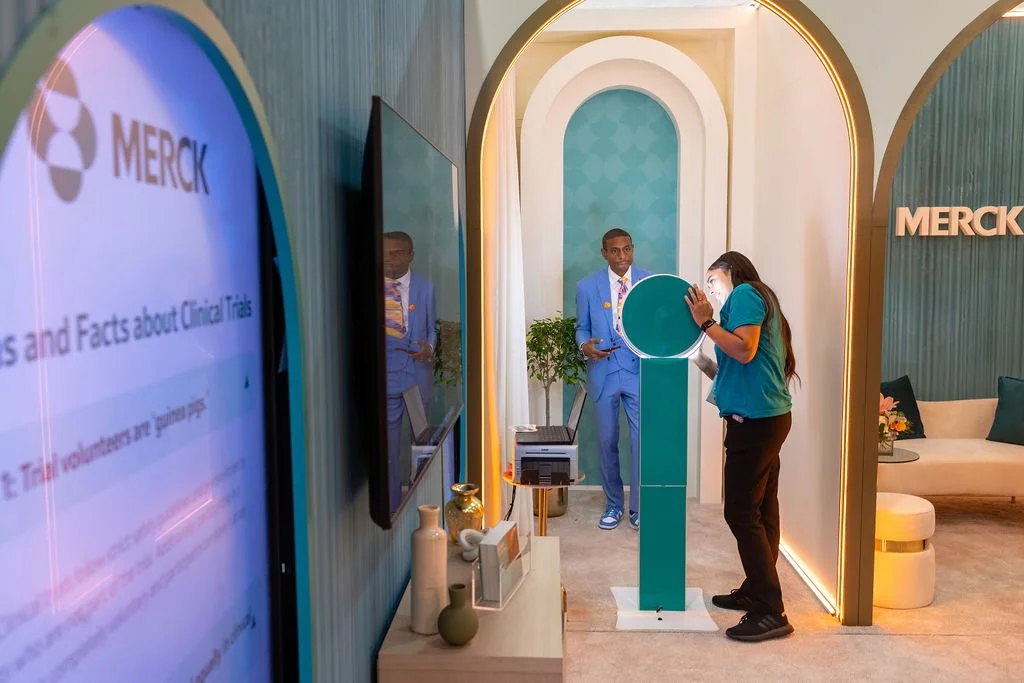
Temporary installations designed to surprise and engage audiences in high-traffic environments. Pop-ups are often visually immersive and optimized for social sharing.
2. Product Launch Activations
Live experiences built around unveiling a new product. These often integrate staging, reveal moments, and digital amplification strategies.
(Our insights on Corporate Event Staging explore how staging supports high-impact product reveals.)
3. Festival and Event Sponsorship Activations
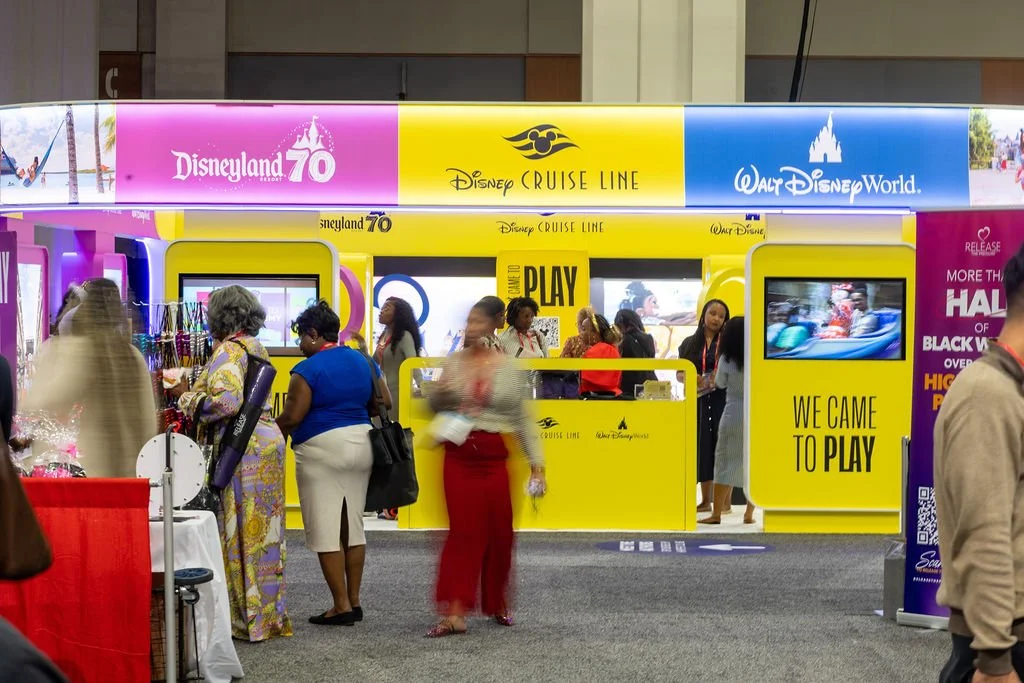
Brands often activate within larger events to engage a targeted audience. This can include interactive booths, branded lounges, sampling stations, or immersive environments.
4. Mobile Tours
Traveling brand experiences designed to reach audiences across multiple markets.
5. Immersive Installations
Large-scale experiential environments that blur the line between art installation and marketing campaign.
Regardless of format, the goal remains consistent: create participation, not just presence.
Why Brand Activations Work
Brand activations succeed because they align experience with strategy.
They allow brands to:
- Demonstrate value rather than claim it
- Encourage product trial
- Collect first-party data
- Generate earned media
- Build emotional resonance
Unlike traditional campaigns that fade quickly, experiential moments create lasting impressions.
Strong activations also integrate digital touchpoints, such as QR codes, AR overlays, or lead capture systems, allowing brands to track engagement beyond the event.
Measuring ROI in Experiential Marketing
One of the most common questions is whether brand activations are measurable.
They are, when planned strategically.
Common experiential marketing metrics include:
- Lead capture numbers
- Product sampling conversion rates
- Social impressions and shares
- Engagement duration
- Email signups
- Sales lift in activation markets
Brand activation strategy should begin with clearly defined objectives. Is the goal awareness, data capture, product trial, or direct sales? Each objective requires different measurement tools.
Without strategy, experiential marketing can feel impressive but untrackable. With strategy, it becomes highly measurable.
Digital Integration and Social Amplification
Modern brand activations are rarely confined to physical space.
Digital integration may include:
- Interactive screens
- Social media walls
- Branded hashtags
- Influencer partnerships
- Livestream components
- QR-enabled data capture

The strongest activations are designed with amplification in mind. They anticipate how participants will document and share their experience.
Hybrid thinking, which blends physical and digital, extends reach far beyond the footprint of the activation itself.
Brand Activation Examples
Brand activations vary widely by industry, but successful campaigns share common traits:
- Clear thematic focus
- Strong visual identity
- Interactive participation
- Seamless production execution
- Integrated digital strategy
For example, a product launch activation might include immersive lighting, interactive demo stations, and a timed reveal moment designed for both in-person and livestream audiences.
A corporate internal activation might focus on culture, values, and employee engagement, using experiential storytelling to reinforce brand identity.
Brand activations are not limited to consumer marketing. They are equally powerful in B2B and internal brand environments.
Common Mistakes in Brand Activation Campaigns
Not all activations succeed.
Common pitfalls include:
- Lack of clear objective
- Overemphasis on aesthetics without strategy
- Poor audience targeting
- Underestimating production complexity
- Failure to integrate digital measurement tools
Experiential marketing requires coordination across creative, technical, and strategic teams.
Strong execution is as important as strong concept.
How to Develop a Brand Activation Strategy
A successful brand activation strategy typically follows these steps:
- Define the objective
- Identify the target audience
- Select the appropriate format
- Design the experiential concept
- Integrate digital and measurement tools
- Execute with precision
- Analyze results
Strategic planning ensures that experiential marketing investments translate into measurable outcomes.
Our Event Strategy & Consulting approach begins with objective clarity before design decisions are made.
Partnering with an Experiential Marketing Agency
Brand activations require interdisciplinary expertise.
A strong experiential partner should bring:
- Creative concept development
- Scenic and staging design
- Technical production precision
- On-site execution management
- Data capture strategy
- Risk management planning
At Stratus Firm, we approach brand activation as a strategic intersection of storytelling, design, and live production. Whether activating within a festival, launching a product, or building a custom immersive environment, our focus remains consistent: create experiences that drive measurable impact.
Final Thoughts: Activation Is Action
Brand activations are not about spectacle alone. They are about action. They invite audiences to step inside a brand story. They create participation rather than passive exposure. They generate moments that live beyond the event itself.
In a crowded marketing landscape, experiential marketing offers something increasingly rare: real connection.